Optics with Batteries


I recently got a promotional email from Swarovski about their new AX Visio. Their just released smart binoculars tout AI bird and animal identification, a compass, a camera which can upload photos to Swarovski's paired app, and some other technical marvels. All of which had that ten-year-old aspiring spy kid inside me jumping up and down with excitement.
But quickly, my current curmudgeonly adult self had to intervene. Is there a monthly subscription for the app? What’s wrong with a $10 bird guide book? Isn’t it better to learn something rather than just have a computer tell me the answer? Are the batteries some esoteric model the local hardware store doesn't carry? Will the whole thing crap out when it’s cold? What are the weight trade-offs? Did they have to sacrifice some optical clarity? Don't I already spend enough time messing around with tech? Isn't glassing how I get away from all of this?
Those in my life know I drag my feet when it comes to adopting new tech. I sometimes come around; I am writing this on a tablet not a typewriter. Still sometimes I just prefer to stick to the traditional approach. I ride a rigid, steel frame, single-speed mountain bike. Full-suspension bikes with Bluetooth derailleurs and all the bells and whistles are amazing. I’ve ridden them, and they are awesome, but I still have more fun on my hardtail. I find that it forces me to pay more attention to the trail. I like that there are fewer things to break and I know how to fix them. In general, I guess I prefer analog to digital. I prefer paperbacks to ereaders. I prefer chess to video games. I appreciate tools like the axe, with no moving parts, and that if you cultivate the skill, you could still build a house with one. I sharpen my knives with a stone, though I could be better at it. But back to optics.
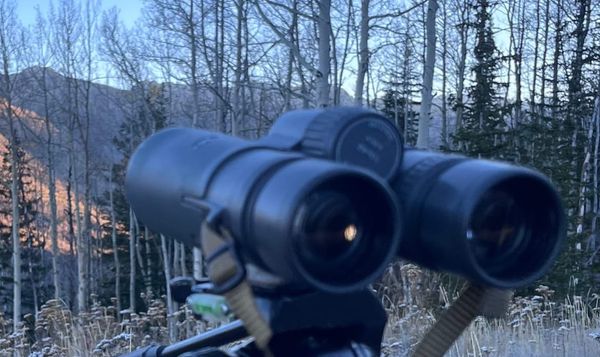
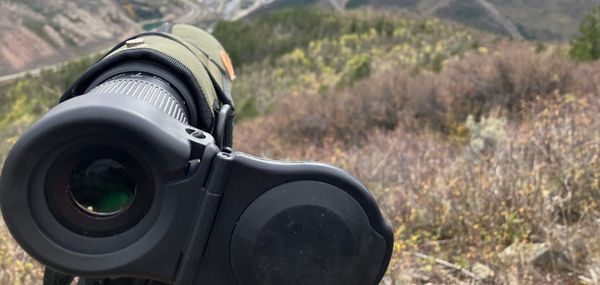
There have been some amazing technological advances in optics in the last few years. Image stabilization, thermal imaging, geolocating, and now even AI identification. All amazing achievements and useful tools. It's great that the world of optics continues to evolve. And it's great that there are a variety of tools available that can meet different needs. But at the end of the day, I love the simplicity and clarity of a traditional pair of binoculars. It's my tool of choice when observing wildlife. There are incredible amounts of science, engineering, and technology that go into making good optics. And I love that I never have to think about them. Just sitting and observing. When I see something interesting, I watch it, try to learn from it, and think about what I'm seeing. It's meditative, and for me, this is the point.
The new AX Visio costs around $5k. If I were to spend that kind of coin, I would expect the optics to last at least through my kids’ lifetimes. Our family has a pair of Swaro binoculars from my grandfather. The kids still use them. Four generations is way longer than I predict this technology will function or be relevant. So for me, it’s worth buying simple but good glass — learning how to use it, learning about what you’re observing, and passing on both the tools and the knowledge gained from using them.